Safe Wall Demolition Practices
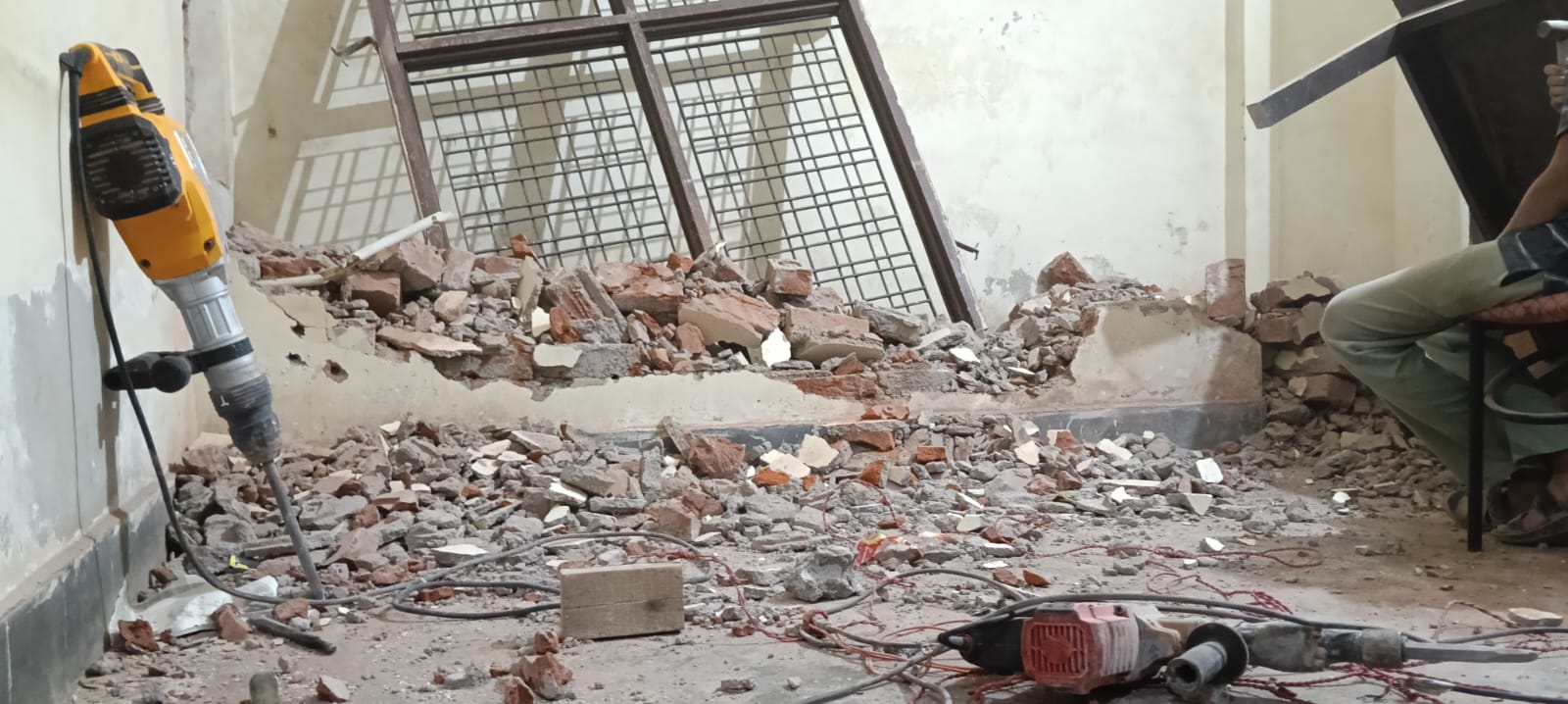
I’ve been working on construction and demolition sites across Kanpur, Lucknow, and Unnao for over ten years now. If there’s one thing that still makes me nervous, it’s watching how most people handle wall demolition. The standard practice around here is simple: you want a wall gone, you hire a local todne wala (demolition laborer) from the nearest chauraha. They show up with a heavy sledgehammer and just start smashing without a second thought.
Here’s the problem: they treat every wall exactly the same. They don't check if it’s a standard partition wall or if the entire weight of the overhead slab is resting on it. Over the years, I’ve seen partial collapses in Kakadeo, cracked ceilings in Swaroop Nagar, and sagging beams all over UP just because someone swung a hammer before doing their homework. Safe wall demolition isn't just about breaking things; it’s about knowing exactly what not to break, and how to protect the rest of the structure.
The Step-by-Step Process for Safe Wall Demolition
Before we even touch a tool, there’s a rigorous process we follow on every single site. You can't just jump in blindly, especially in older UP buildings where the original construction plans are long gone. Here is the exact sequence you should follow to ensure safety:
- Identify the wall type: Is it a 4.5-inch partition wall, a 9-inch load-bearing brick wall, or an RCC shear wall? The thickness, location, and what sits directly above it will tell you a lot.
- Consult an engineer: If you suspect it’s load-bearing, you must get a structural engineer to look at it. No exceptions. A quick visual check isn't enough when heavy structural loads are involved.
- Clear the utilities: Disconnect all electrical wiring, switchboards, and plumbing lines running through that specific wall. Turn off the main water supply if plumbing is involved. Hitting a live wire or a pressurized PVC pipe with a breaker is a disaster.
- Support the structure: If the slab needs temporary support, set up strong steel jacks and shuttering plates tight against the ceiling before any cutting begins. Never rely on wooden ballis (poles) for heavy loads.
- Dust control preparation: Seal off the rest of the house. Demolition creates fine silica dust that gets everywhere. Cover doors with heavy plastic sheets and use misting to keep dust down.
Tackling Partition Walls (4.5 inch or 9 inch Brick)
Most interior modifications involve removing partition walls to make bigger rooms or open-concept living areas. These are usually standard 4.5-inch half-brick walls or sometimes 9-inch full-brick walls that don’t carry the building's structural load. They are just there to divide space.
These can usually be taken down manually by a skilled mistri with a heavy chisel and hammer, but you have to be smart about it. The golden rule is: always start from the top and work your way down row by row. Never knock out the bottom rows first to let the top crash down in one massive piece. I saw a crew do this in a flat in Civil Lines; the impact of the falling 9-inch brickwork cracked the 4-inch floor slab beneath it, causing severe leaks into the flat below.
Contractor Tip: Protect Your Floors
Before breaking any partition wall, lay down old tires, thick rubber mats, or a thick bed of sand on the floor. When heavy chunks of plaster and solid brick fall, this layer absorbs the impact and saves your existing tiles or expensive marble from shattering.
Load-Bearing Walls: The High-Risk Zone
Load-bearing walls hold up your roof and the floors above. If you remove them without a proper plan, the structure above will fail. It’s that simple. You should absolutely never attempt safe wall demolition on a load-bearing wall without a detailed alternate support plan drafted by a structural engineer.
Typically, this involves inserting a heavy steel I-beam (girder) spanning the gap, supported by new columns, to carry the load before the brickwork below is removed. When we do this kind of sensitive work, we strictly avoid sledgehammers. The heavy vibration from manual hammering can weaken the mortar joints in the rest of the building. Instead, we use diamond cutting tools. By using a diamond wall saw, we can cut a precise, clean opening exactly to the engineer's dimensions, leaving the surrounding load-bearing structure completely undisturbed.
Dealing with RCC Walls and Dense Concrete
If you’re dealing with an RCC (Reinforced Cement Concrete) wall, like those found in basements or elevator shafts, manual demolition is practically impossible. The concrete (usually M20, M25, or even M30 grade) is extremely hard, and the dense grid of 10mm, 12mm, or 16mm TMT steel bars will stop a standard hammer dead. Trying to break an RCC wall with a manual chisel or a heavy jackhammer will just violently shake your entire building.
For RCC walls, we rely entirely on our heavy-duty Dongcheng diamond core drills and diamond wall saws. Instead of smashing, we make strategic relief cuts. We slice the concrete into manageable rectangular blocks, cutting cleanly right through the thick steel rebar, and then carefully remove the blocks one by one. It’s controlled, it’s highly systematic, and it is specifically designed to reduce structural disturbance.
Multi-Story Building Challenges in UP
A lot of our core cutting and concrete drilling work happens in multi-story apartments and commercial complexes in heavily populated places like Kidwai Nagar, Barra, or Jajmau. When you’re doing demolition on the third floor of a fully occupied building, you have to think about your neighbors. If you let a reckless crew loose with heavy breakers, the vibration travels directly down the columns to every single floor. Plaster starts falling off ceilings, light fixtures shake, and people start complaining very quickly.
In these situations, diamond cutting isn't just a nice option; it’s the only practical way to get the job done. Our equipment runs smoothly at 1200-2200 RPM, cutting through the concrete with minimal vibration. We also maintain a continuous water flow rate to cool the diamond segments, which means we produce significantly less dust compared to dry hammering.
Debris Management and Cleanup
A major, often overlooked part of safe wall demolition is what you do with the malba (rubble). Concrete and brick are incredibly heavy—a single cubic meter of solid brickwork weighs close to 1900 kg. You can't just pile it up on the balcony or the roof. Doing so puts a massive, concentrated dead load on your 4-inch or 6-inch slab, which it simply wasn't designed to hold. We bag the debris immediately in tough cement sacks and safely move it down to the ground level in small batches.
Also, dumping rubble on the roadside or in empty plots is illegal and invites heavy municipal fines across UP. Make sure your contractor actually arranges for a tractor or dumper truck to haul the debris away to designated municipal dumping zones.
Legal and Municipal Requirements
Before you knock down walls, keep the local authorities in mind. In cities governed by the Kanpur Development Authority (KDA) or Lucknow Development Authority (LDA), minor interior changes (like removing a 4.5-inch non-load-bearing partition wall) generally don't require formal permission. However, if you are making major structural modifications, removing load-bearing walls, altering columns, or changing the exterior facade, you absolutely need an NOC (No Objection Certificate) or a revised building plan approval. Getting caught doing unauthorized structural changes can lead to immediate work stoppages and severe penalties.
Frequently Asked Questions
How do I know if my wall is load-bearing?
In typical UP brick construction, 9-inch outer boundary walls and central internal walls running the length of the house are usually load-bearing. If the wall is directly under a concrete beam or supporting the slab above without any beam, it’s carrying weight. 4.5-inch half-brick walls are typically partitions. When in doubt, always have an experienced civil engineer check.
Is diamond cutting more expensive than manual demolition?
Upfront, yes. Bringing in diamond cutting equipment and operators costs more than hiring daily wage manual labor. However, heavy manual hammering often causes hidden micro-cracks in surrounding walls and slabs, leading to expensive plaster repairs and structural issues months later. Diamond cutting is incredibly precise and saves you from those massive, unexpected repair costs down the line.
How long does it take to demolish a standard room wall?
For a standard 10x10 foot, 4.5-inch partition wall, safe manual demolition takes about half a day, plus another half day just for bagging and debris removal. For RCC walls, using our Dongcheng wall saws and concrete breakers, we can usually cut and safely remove the sections in one to two working days, heavily depending on the thickness and the density of the 12mm or 16mm rebar inside.
Need Professional Service in Kanpur?
Contact CoreCut India today for a free site assessment and transparent quotation.
PricingProjects Call 9236323804